When an articulating boom makes sense in Wichita
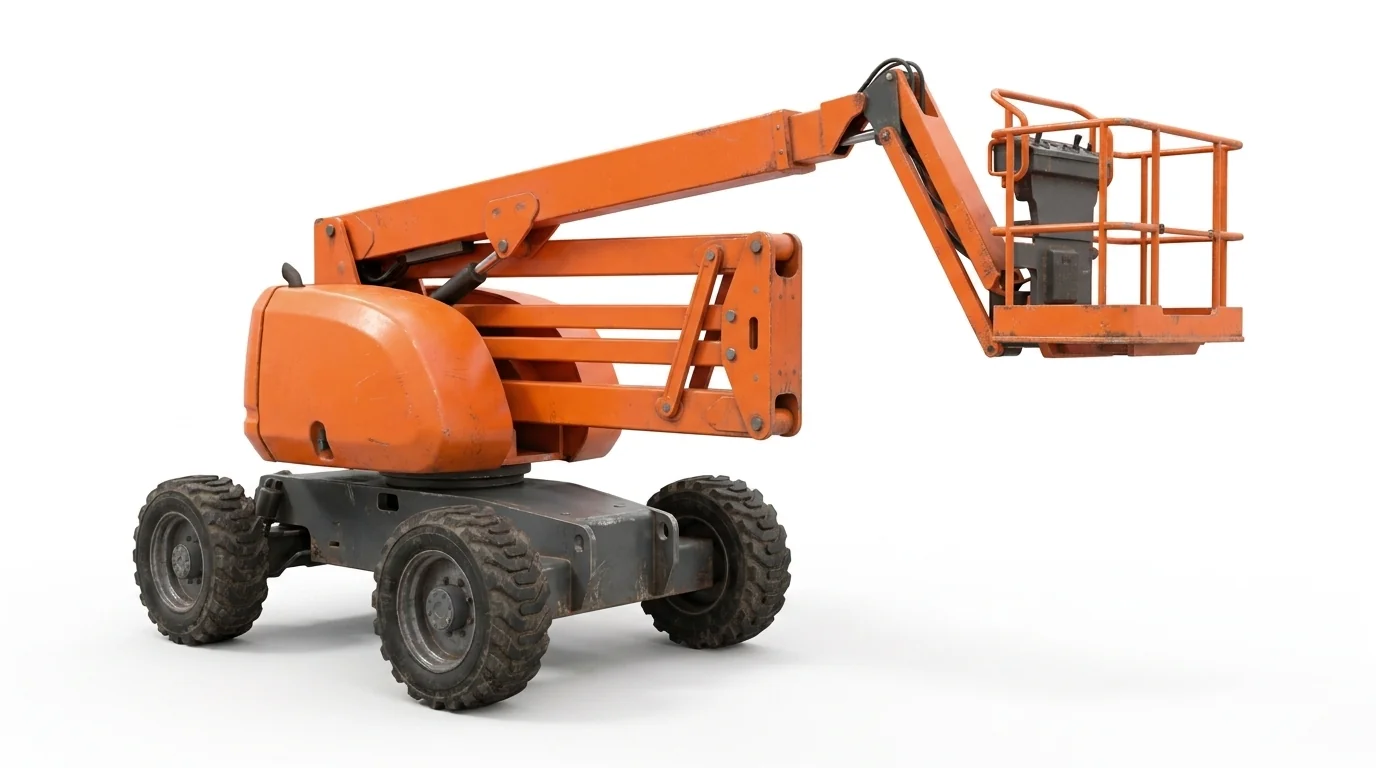
Articulated sections help place the platform around trusses, utilities, and tooling lines without moving the base as often. In local industrial sites, that reduces repositioning across painted floors, epoxy slabs, or marked taxi lanes. Outdoors, the jointed boom can rise, reach over a façade or canopy, and then descend to the work face.
Key factors that narrow the choice: - Obstruction layout: If steel, piping, or conveyors block a straight approach, an articulating boom provides the necessary up-and-over path. - Setback distance: Measure how far the machine must sit back from the work due to curbs, pits, landscaped beds, or floor markings. - Platform height vs. reach: Maximum height alone is not enough; confirm the horizontal reach needed after clearing the obstacle.
Wichita climate and surface considerations
The regional climate brings temperature swings and frequent wind. For exterior tasks, actual site conditions, the unit’s instructions, and your job procedures govern whether work proceeds that day. On unpaved or saturated clay soils around new builds, rough-terrain versions with appropriate tires usually handle the approach better than slab models. On smooth interior floors within large production spaces, narrow electric units reduce floor load and emissions.
Indoor vs. outdoor configuration
- Interior work: Compact, electric articulating booms fit between machinery and aisles, and their jib articulation helps reach under beams or around ducts. Compare machine width to aisle clearances and doorway heights.
- Exterior work: Engine-powered rough-terrain models manage grade changes, approach angles, and unfinished surfaces. Verify the ground bearing path from staging to the set point.
When a different lift is better
- Straight vertical work with no overhead obstacles often favors a scissor. See /electric-scissor-lift-rental/ for slab areas or /rough-terrain-scissor-lift-rental/ for unfinished sites.
- Long, unobstructed reaches to a wall or stack typically point to a straight boom. See /telescopic-boom-lift-rental/.
- Material placement to elevated decks or roofs leans toward /telehandler-rental/.
Planning checklist
- Obstacle map: height, depth, and lateral offset of what you must clear
- Setback zone: minimum distance the base must keep from the work face
- Access path: narrowest doorway, tightest turn, and softest ground section
- Wind exposure: typical direction and shielding from structures or tree lines
For broader aerial categories, browse /boom-lift-rental/ or /aerial-lift-rental/.